Featured Beverage & Canning Equipment
Field-proven engineering systems designed for craft breweries, commercial bottlers, and liquid processing plants globally.
Executive Summary: The Rise of Chinese Beer Canning Machinery Manufacturing
The global craft beer and commercial beverage packaging sector has experienced a profound shift over the last decade. Aluminum cans have rapidly displaced glass bottles due to superior light barrier properties, 100% recyclability, lower freight costs, and optimal shelf-life protection. Within this industrial transformation, Chinese OEM manufacturers—headquartered primarily in advanced machinery clusters like Zhangjiagang, Jiangsu—have emerged as world-class suppliers of high-precision beer canning lines.
Engineering modern beer canning machinery requires overcoming three technical hurdles: **Dissolved Oxygen (DO) control**, **isobaric pressure stabilization during filling**, and **hermetic double-seam integrity**. Leading Chinese manufacturers like **Zhangjiagang UJDI Machinery Co., Ltd.** have bridged the gap between expensive European machinery and low-reliability alternatives by delivering CE-certified, Intertek-assessed, fully automated canning monoblocks that match strict international standards at a highly competitive Total Cost of Ownership (TCO).
Technical Benchmark: Premium beer canning lines must maintain Total Dissolved Oxygen (TDO) pickup under 30 ppb (parts per billion). Excessive oxygen leads to staling, haze formation, trans-2-nonenal flavors (cardboard notes), and reduced product shelf life.
Core Technical Engineering of Advanced Beer Canning Lines
A professional automatic beer canning line integrates multiple electromechanical sub-systems working in perfect synchronization. Below is an architectural overview of how top-tier equipment operates:
1. De-palletizing & Twist Air Rinsing
Empty aluminum cans (Standard, Sleek, or Slim formats) are automatically fed into a twist cage where ionized air or sterile water rinses the interior, eliminating dust and micro-particles. Static eliminators ensure complete particle clearance before conveying cans to the filler.
2. Dual Pre-Evacuation & CO2 Purging Valves
Unlike soft drinks, beer is highly sensitive to oxygen. Premium canning machines utilize specialized electro-pneumatic isobaric filling valves. The process follows a strict sequence:
- Pre-purging / Double Evacuation: The empty can is sealed against the valve head and evacuated using a vacuum pump, followed by high-purity CO2 pressurization. This process is repeated twice to achieve over 99% atmospheric air displacement.
- Isobaric Counter-Pressure Equilibrium: Carbonated beer is pumped into the bowl under controlled CO2 head pressure (typically 0.2 to 0.35 MPa). Filling begins only when internal can pressure matches the tank pressure.
- Laminar Flow Liquid Filling: Mechanical or flowmeter-controlled filling valves deliver beer along the interior wall of the can to eliminate turbulence and foaming.
- Controlled Snifting (Pressure Relief): Slow, multi-stage pressure venting prevents violent gas expansion when the seal breaks.
3. Under-Cover CO2 Gassing & High-Precision Seaming
Between the filling bowl and the seaming station, a controlled stream of CO2 gas ("under-cover gassing") or ultrasonic jetting forces a dense micro-foam bubble to rise to the lip of the can (bubble-over), driving out any lingering ambient air before the lid is placed.
The seaming head uses a dual-roll mechanism (1st operation for curl creation, 2nd operation for hermetic flattening) driven by heavy-duty servo motors or mechanical cam systems. Precision machining ensures cover hook, body hook, countersink depth, and overlap percentage comply with strict international packaging guidelines.
System Performance Comparison: Inline vs. Rotary Canning Lines
| Performance Metrics | Inline Beer Canning Systems | Rotary Monoblock Canning Lines |
|---|---|---|
| Capacity Range (CPH) | 1,000 – 3,000 CPH | 4,000 – 15,000+ CPH |
| Dissolved Oxygen Pickup (DO) | 40 – 80 ppb | < 20 – 35 ppb (Optimal) |
| Seamer Mechanism | Pneumatic or single-station mechanical | Multi-head continuous rotary servo seamer |
| Footprint & Mobility | Compact, highly modular | Fixed industrial floor layout |
| Target Application | Microbreweries, pilot plants, brewpubs | Commercial breweries, large contract packagers |
Future Procurement Trends in Beer & Beverage Packaging (2025–2030)
Procurement directors and brewery engineers evaluating equipment manufacturers in China must consider multi-year technological evolutions. Over the next decade, beverage packaging procurement will be governed by five macro-trends:
1. Servo-Driven Mechanical Precision
Traditional pneumatic actuators are being replaced by direct-drive brushless servo motors. Servos provide micrometer-level seaming control, reducing can rim tears and mechanical wear.
2. Flowmeter & Electronic Filling
Electromagnetic and mass flowmeter valves enable recipe-based electronic volume adjustments via PLC touchscreens, eliminating manual mechanical stem changes.
3. Hygienic CIP Automation
Fully automated Clean-In-Place (CIP) systems with dummy cans, automated temperature monitoring, and acid/alkali circulation loops guarantee strict microbiological control.
4. Multi-Can Format Versatility
Modern lines demand quick-change tooling that can swap between 250ml Slim, 330ml Sleek, 355ml Standard, 473ml (16oz), and 500ml cans in less than 45 minutes.
5. Real-Time Quality Inspection
Integration of inline visual inspection cameras, high-precision seam analyzers, and automatic reject stations for low fill levels or missing lids ensures 100% compliant shipments.
6. Sustainable Resource Utilization
Advanced gas recovery systems reuse CO2 during purge cycles, while closed-loop water chillers reduce plant energy footprint by up to 28%.
Industry Development Trends: What Distinguishes Top Chinese Manufacturers?
When evaluating suppliers from China for full automatic beer and beverage packaging equipment, buyer decision-making has evolved beyond mere equipment price. Engineering authority, certified quality controls, and verified factory infrastructure define the leading manufacturing tier.
1. Material Standards & Hygienic Design
Top manufacturers strictly utilize food-grade stainless steel **SUS304** for structural frames and **SUS316L** for liquid contact piping and filling valves. All internal pipe surfaces undergo mirror polishing (Ra < 0.4 µm) to prevent bacterial attachment points.
2. Third-Party Audits & CE Compliance
Reliable factories maintain international safety and health certifications. Companies like **Zhangjiagang UJDI Machinery Co., Ltd.** undergo rigorous on-site facility assessments by independent verification bodies such as **Intertek**, validating manufacturing capabilities, CNC machining centers, testing protocols, and compliance with EU CE directives.
3. Turnkey System Integration Capability
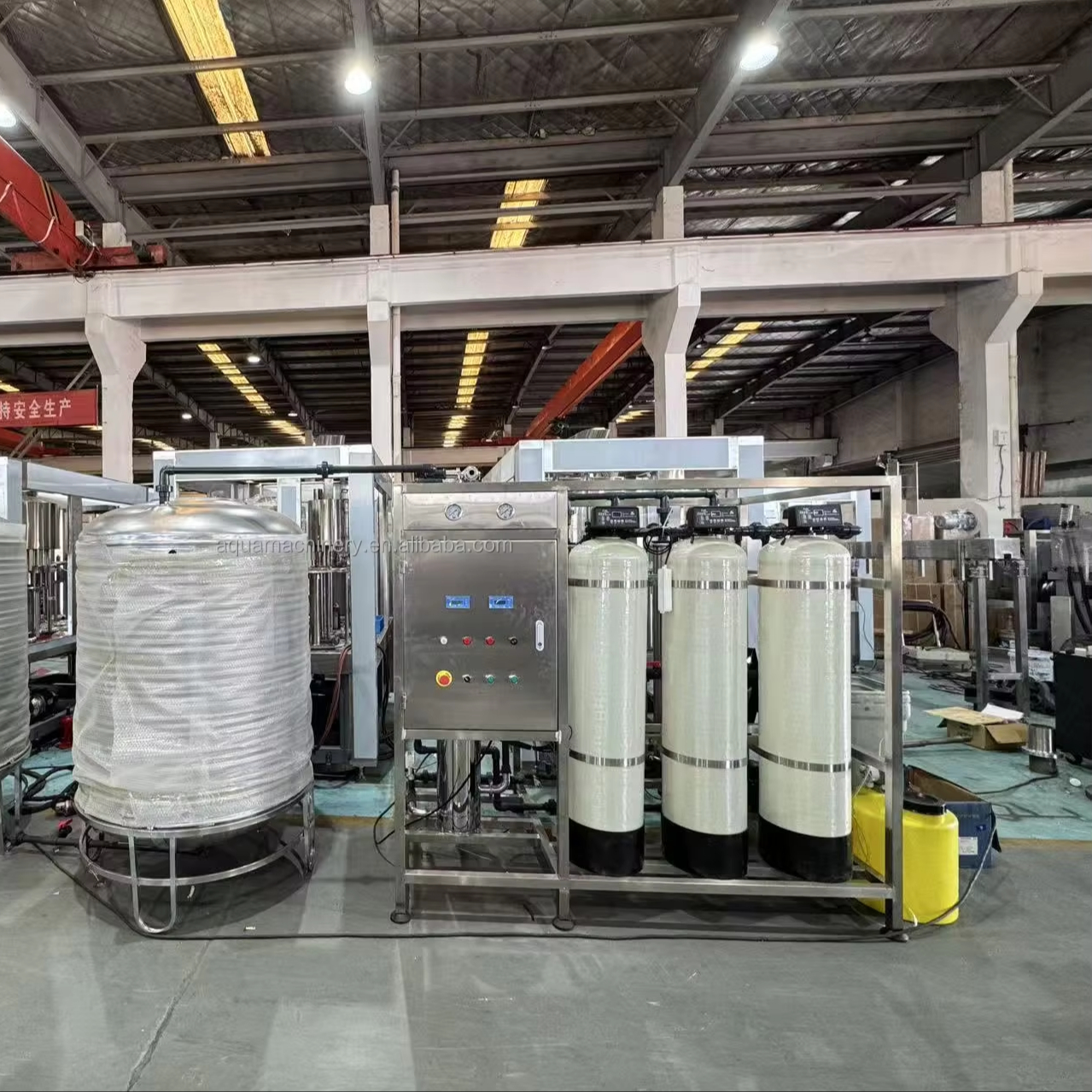
Sourcing a piecemeal production line often causes communication gaps between different machine vendors. Premier manufacturers supply completely coordinated turnkey plants—comprising Water Treatment (RO/Ozone), Syrup Preparation, Carbonation Mixers, PET Blow Molders, Monoblock Fillers, Date/Laser Coders, BOPP/Sleeve Labelers, and End-of-Line Shrink Wrappers.
Enterprise Advantages: Why Partner with Zhangjiagang UJDI Machinery Co., Ltd.?
Located in Zhangjiagang City, Jiangsu Province—the global hub for beverage packaging equipment manufacturing—**Zhangjiagang UJDI Machinery Co., Ltd.** stands out as a high-technology enterprise specializing in complete turnkey liquid packaging projects:
- 13+ Years of Manufacturing Leadership: Over a decade of dedicated R&D in carbonated drinks, beer canning, mineral water bottling, hot-fill juice lines, and 5-gallon barreled water equipment.
- On-Site Assessed Supplier by Intertek: Fully verified workshop capacity, stringent raw material inspection, and standardized assembly procedures.
- CE & International Certification: Complete compliance with European electrical and mechanical safety guidelines, utilizing premium components (Siemens PLC, Schneider electronics, Festo pneumatics, Omron sensors).
- Full Customization & ODM Service: Lines tailored to exact plant footprints, local voltage requirements (220V–480V, 50Hz/60Hz), bottle/can specs, and target hourly capacities (2,000 to 15,000 BPH/CPH).
- End-to-End Testing & Pre-Shipment Inspection: Every machine undergoes 72 hours of continuous simulated production testing with actual cans/bottles prior to seaworthy wooden box packing.
- Global Engineering Support: Turnkey installation, commissioning, staff training, and responsive lifetime spare-parts supply across Latin America, Africa, the Middle East, Southeast Asia, and Europe.