China Drinking Water Filling Machine Manufacturing Landscape & Procurement Whitepaper
An authoritative analysis of technical specifications, sanitary engineering standards, total cost of ownership (TCO), and global sourcing strategies for commercial liquid packaging lines.
1. Executive Overview: Sourcing Bottling Equipment from China’s Premier Machinery Hub
The global demand for bottled drinking water—encompassing purified spring water, mineral-enriched water, hydrogen-rich alkaline water, and functional electrolyte beverages—continues to expand at an unprecedented CAGR of 6.2%. To remain competitive, beverage brand owners, co-packers, and municipal water plants require high-efficiency automated bottling infrastructure that minimizes operational expenditures (OPEX) while strictly avoiding biological contamination.
Zhangjiagang City, located in the Jiangsu Province of China, has solidified its position as the premier global epicentre for liquid packaging machinery manufacturing. Companies operating in this industrial cluster, led by industry pioneers such as Zhangjiagang UJDI Machinery Co., Ltd., integrate advanced European sanitary design principles with optimized Asian supply-chain agility. Sourcing drinking water filling lines directly from tier-one Chinese manufacturers provides international buyers with a distinct economic advantage: world-class 3-in-1 monoblock machinery at 40% to 60% lower total capital investment compared to Western European OEMs, without compromising on mechanical reliability, component sourcing (Siemens PLCs, Schneider electronics, Festo pneumatics), or food-contact safety standards (SUS304/SUS316L).
2. Engineering Deep-Dive: 3-in-1 Monoblock Technology vs. Modular Lines
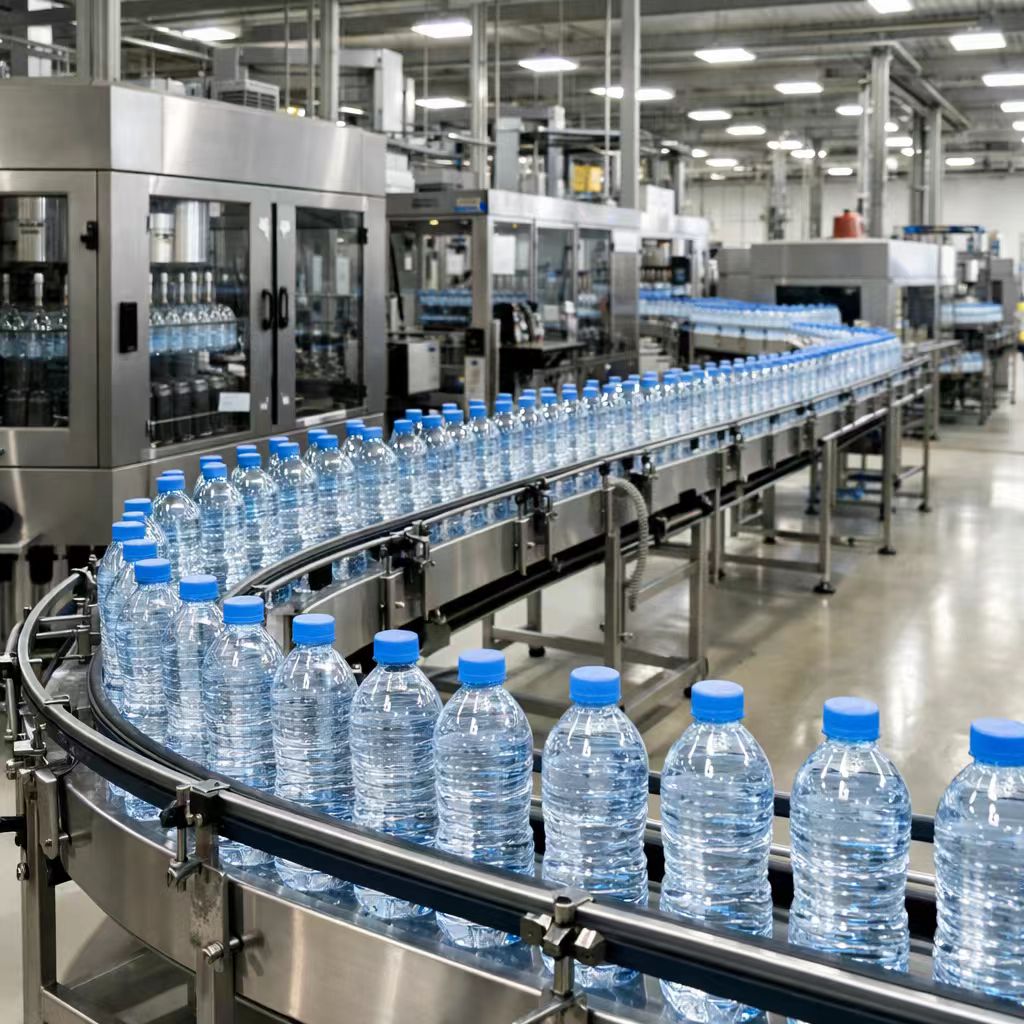
In modern high-speed bottling facilities, traditional modular lines—where separate machines rinse, fill, and cap containers via lengthy transfer conveyors—are rapidly being phased out in favor of integrated 3-in-1 Rinsing-Filling-Capping Monoblock Systems.
The core mechanical benefit of the Monoblock design lies in its neck-handling transfer mechanism. By lifting PET bottles by their neck rings rather than supporting them from the base, the line eliminates bottle-height adjustability issues, reduces container jam rates by 98%, and dramatically shortens size changeover times from hours to minutes.
- Sanitary Advantage: Enclosed HEPA-filtered cleanroom canopies prevent airborne dust and microbes from entering open containers between rinsing and sealing.
- Floor Space Efficiency: Monoblocks reduce line footprint by up to 45%, saving valuable plant real estate.
- Synchronized Drive: A single master motor equipped with precision mechanical gears synchronizes star-wheels, filling carousels, and capping heads, reducing electrical friction losses.
TCO & Energy Optimization Metrics
Integrating direct preform-to-bottle blowing with monoblock filling reduces compressed air consumption by up to 25% through air-recovery recirculation circuits, cutting electric power costs per 1,000 bottled units significantly.
3. Technical Analysis of the 8 Core Bottling & Water Treatment Equipment
To assist global engineering teams in specifying equipment for upcoming capital projects, the following technical breakdown details the functional mechanics and operational capabilities of key water bottling infrastructure:
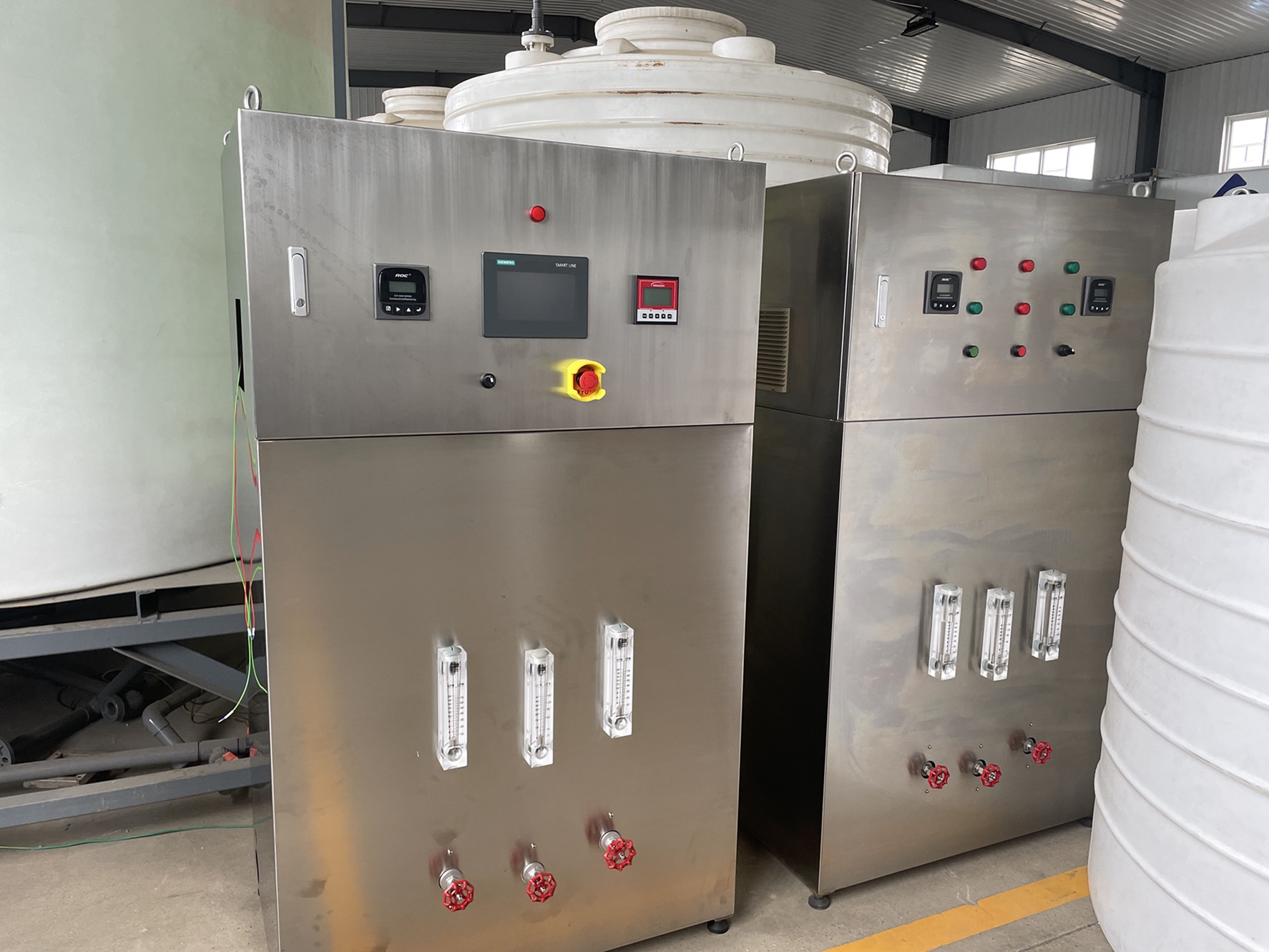
Industrial Alkaline Water Ionizers
Utilizing platinum-coated titanium electrolytic plates, 1000L/H ionizers separate purified feed water into acidic and alkaline streams. The machine continuously controls ORP (Oxidation-Reduction Potential) and pH levels (ranging from 8.5 to 9.5) for high-value functional bottled water lines.
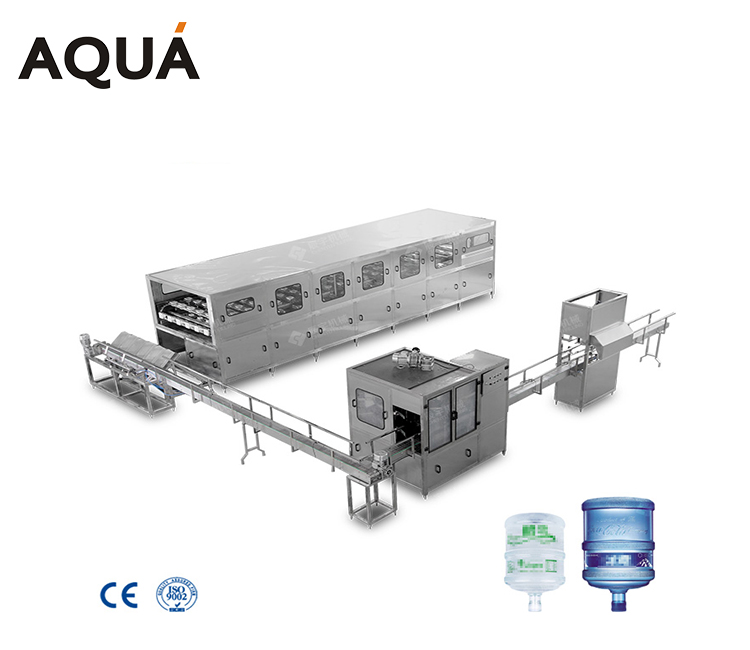
5-Gallon (19L) Large Barrel Lines
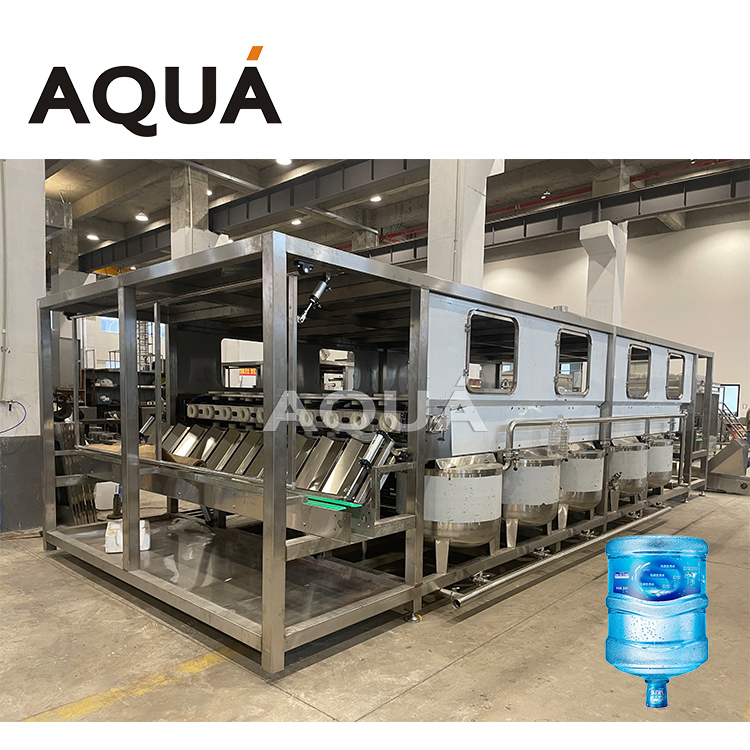
Built specifically for 18.9L reusable polycarbonate/PET barrels, machines like the AQUA QGF-600 feature multi-stage washing (heating alkali wash, disinfectant rinse, recycled water, and sterile water wash) followed by contactless gravity filling and auto-de-capping/capping.
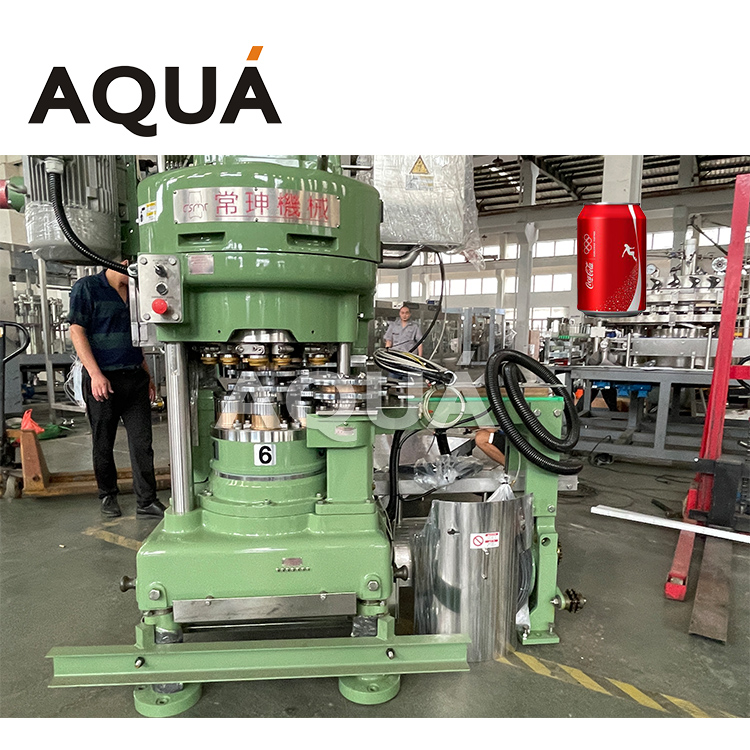
Aluminum Can Filling & Seaming Lines
Engineered for sleek, slim, and standard aluminum beverage cans, these lines employ mechanical counter-pressure (isobaric) filling valves to maintain precise carbonation levels or inert gas purging (liquid nitrogen dosing) for non-carbonated water and RTD teas prior to double-seaming.
Reverse Osmosis (RO) Purification Systems
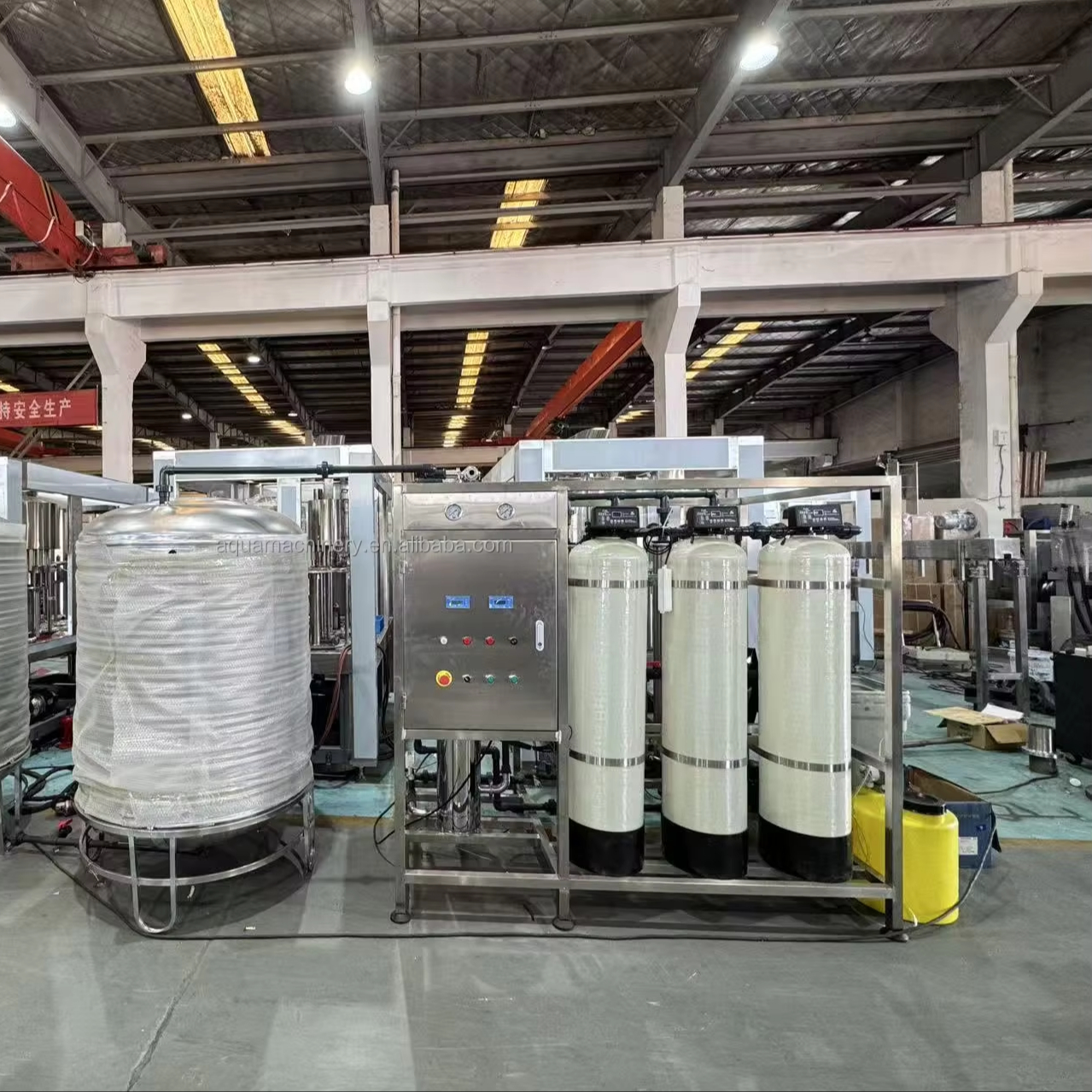
Operating from 500 LPH up to enterprise-scale 50,000 LPH capacities, RO plants remove dissolved solids, heavy metals, and microbes via semi-permeable membranes (0.0001-micron rating), complemented by quartz sand, activated carbon pre-filtration, and ozone/UV sterilization loops.
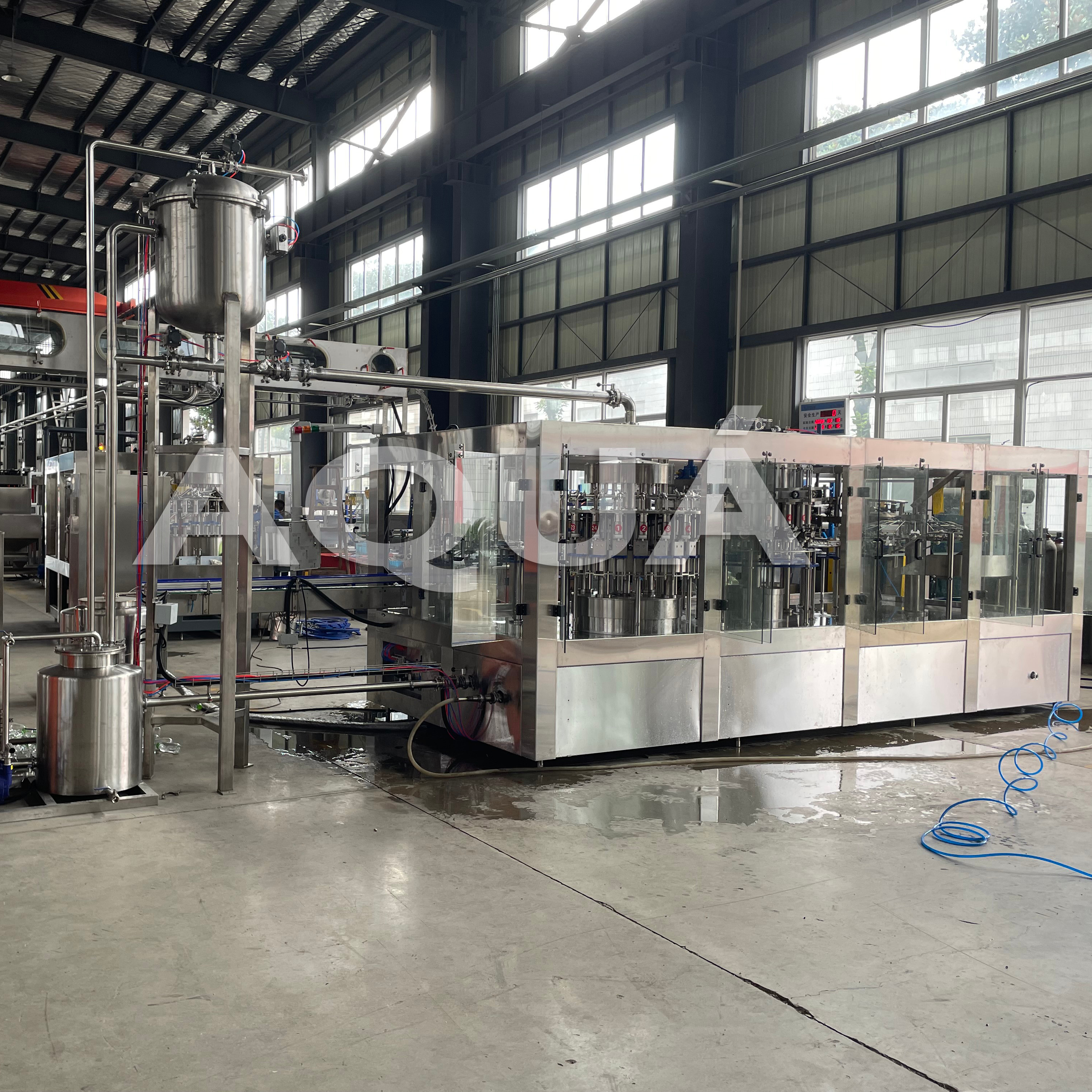
High-Speed PET Monoblocks (Up to 15,000 BPH)
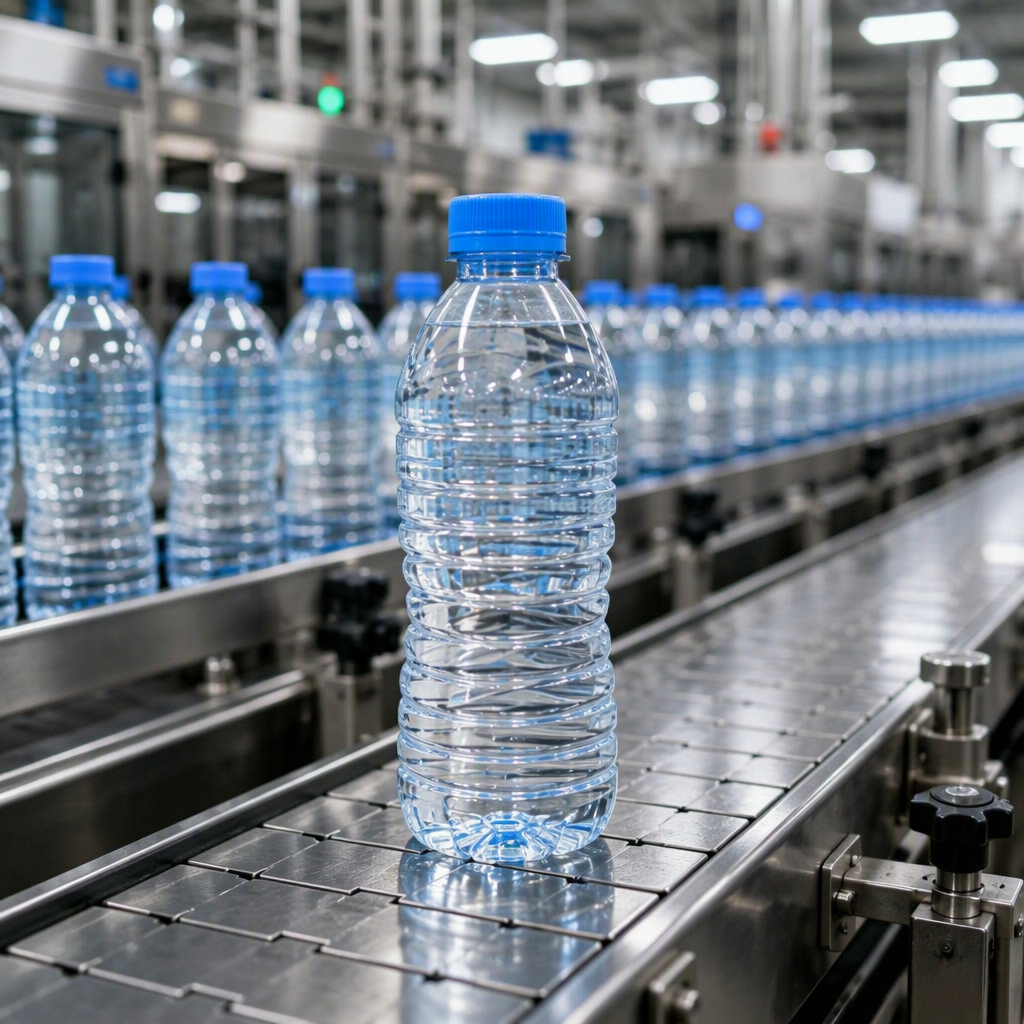
Incorporating pneumatic liquid level control valves, rapid magnetic torque capping heads, and automatic lubrication systems. These lines utilize food-grade SUS316L stainless steel for all fluid contact channels to ensure compliance with strict FDA and EU hygienic standards.
Multi-Beverage CSD & Hot Filling Lines
Designed for dual-purpose operations, high-precision isobaric and hot-filling (85°C - 90°C) monoblocks utilize vacuum-assisted liquid level regulation and thermal juice recirculation loops, making them highly versatile for bottlers producing both soda water and fruit juices.
4. Bottling Line Selection Matrix & Technical Specifications
Choosing the right machine configuration requires matching target market volume with mechanical head counts, container geometries, and electrical utility capacities. The matrix below serves as an engineering benchmark for plant managers:
| Nominal Speed (BPH) | Monoblock Setup (R-F-C) | Bottle Volume Range | Filling Valve Type | Air Consumption | Total Power (kW) |
|---|---|---|---|---|---|
| 2,000 - 3,000 BPH | 8 Rinsing / 8 Filling / 3 Capping | 200 ml - 2000 ml | Gravity Liquid Level Valve | 0.3 m³/min | 4.5 kW |
| 4,000 - 6,000 BPH | 16 Rinsing / 12 Filling / 6 Capping | 250 ml - 1500 ml | Micro-Pressure Mechanical | 0.6 m³/min | 7.5 kW |
| 8,000 - 10,000 BPH | 24 Rinsing / 24 Filling / 8 Capping | 330 ml - 1000 ml | Flowmeter / Electronic Valve | 0.8 m³/min | 11.0 kW |
| 12,000 - 15,000 BPH | 32 Rinsing / 32 Filling / 10 Capping | 330 ml - 750 ml | High-Precision Flowmeter | 1.2 m³/min | 18.5 kW |
| 300 - 600 Barrels/H | QGF-300 to QGF-600 Series | 3 Gallon & 5 Gallon (19L) | Contactless Time-Gravity Valve | 0.8 m³/min | 15.0 kW |
5. Future Procurement Trends in Global Beverage Packaging (2025–2030)
As global environmental regulations tighten and consumer preferences shift toward eco-friendly packaging, purchasing directors must align their capital investments with long-term technological trends:
1. Lightweighting & rPET Integration
Modern PET water bottles have evolved from 18g down to ultra-lightweight 9.5g designs for 500ml containers. Machinery must feature delicate neck-clamping handling and soft-touch pneumatic grippers to process 100% rPET (recycled PET) preforms without structural neck distortion.
2. Smart Automation & IoT Connectivity
Industrial Industry 4.0 integration allows plant supervisors to monitor Overall Equipment Effectiveness (OEE), filling valve flow rates, and thermal bearing wear in real time via cloud-connected PLC dashboards, facilitating predictive maintenance before unplanned downtimes occur.
3. Sustainable Energy & Water Recovery
Leading Chinese manufacturers now equip bottle rinsers with closed-loop sterile water filtration systems that recirculate rinse water into secondary CIP wash cycles, reducing plant raw water consumption by up to 35% annually.
Why Partner with Zhangjiagang UJDI Machinery Co., Ltd.?
With over 13 years of dedicated engineering excellence, Zhangjiagang UJDI Machinery Co., Ltd. provides turnkey liquid packaging solutions tailored to your specific plant dimensions, local electrical grid standards, and bottle design specifications. Our factory undergoes rigorous on-site assessment by Intertek, and all filling equipment carries official CE certification.
Frequently Asked Questions by Global Machinery Buyers
Essential answers to key engineering, shipping, compliance, and operational questions asked during the equipment procurement process.