Choosing a Water Bottling Line is not just a matter of comparing speeds on a supplier’s brochure. It means matching equipment to your water source, container formats, production targets, and available floor space. A line designed for small glass bottles may not suit a plant filling large PET containers. The difference shows up on the factory floor: in changeover time, rejected bottles, and operators reaching awkwardly around equipment.
Water-resource expert Peter H. Gleick has said, “Water is the most critical resource issue of our lifetime and our children’s lifetime.” His words are a useful reminder that dependable production starts with careful water management. For a bottling line, that means looking beyond the filler. Treatment capacity, hygienic design, rinsing, capping, labeling, and packaging all need to work together. One weak link can slow the whole line. Sometimes the bottleneck is surprisingly small.
This guide explores the questions buyers should ask before selecting equipment: How much output is genuinely needed? Which bottle sizes must the line handle? How easily can staff clean and maintain it? A high-speed system can look impressive, but unused capacity still costs money. And specifications never tell the whole story. Real production conditions can be messier than a sales diagram suggests. Consider service access, spare-parts availability, and room for future changes, then compare suppliers using the same requirements. A careful choice may take longer, but it can make daily operation steadier and less wasteful.
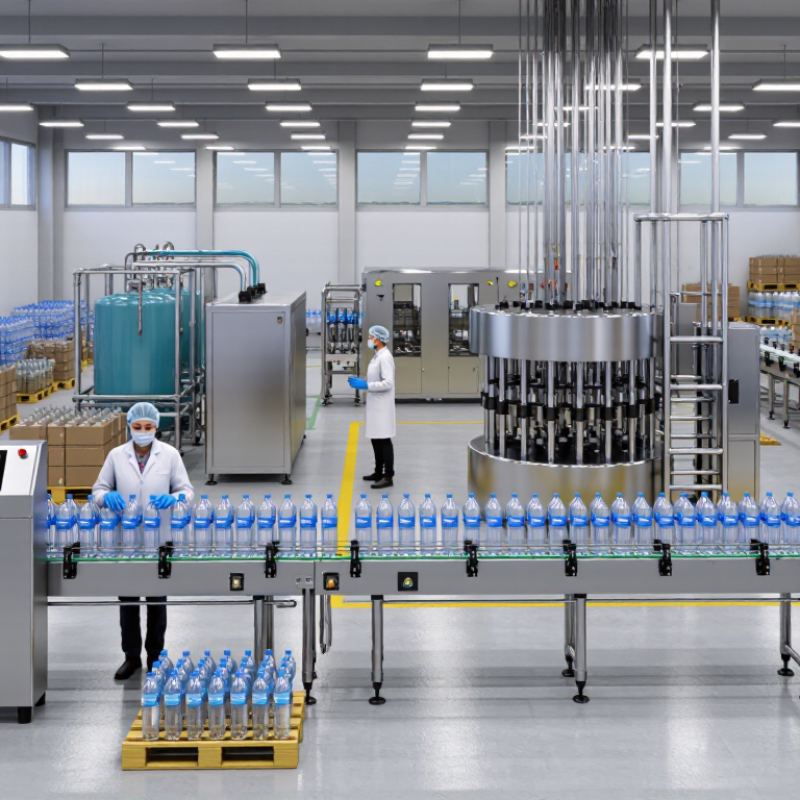
A water bottling line should match the product before it matches a target speed. Still water, carbonated water, and mineral water can require different filling conditions and quality checks. Bottle size matters too. A 330-milliliter bottle and a five-liter container need different handling, changeover time, and downstream packing. Define the expected mix of sizes, materials, and closures before requesting equipment quotes.
Packaging choices affect the line itself. Lightweight PET bottles may need careful conveying to prevent tipping or deformation, while glass requires more robust handling. NAPCOR’s 2023 PET Recycling Report reported a 29% U.S. PET bottle recycling rate, a useful reminder to consider material recovery alongside package cost. Small details matter. Even label placement can affect inspection and reject rates.
Set output targets from realistic demand, not a best-case shift. The International Bottled Water Association’s 2023 market report, using Beverage Marketing Corporation data, reported U.S. bottled-water consumption of 15.9 billion gallons. That figure shows scale, but it cannot predict your plant’s orders. Specify peak and average demand, operating hours, planned maintenance, and acceptable downtime. Include room for seasonal growth, but avoid buying capacity that sits idle. Early estimates are often wrong; revise them after reviewing actual orders and changeover records.
Choosing a bottling line starts with the source water, not the filler speed. A spring, municipal supply, or borehole can vary in turbidity, hardness, mineral content, and microbial load. Test samples across seasons, not just on one clear day. Check pH, conductivity, iron, manganese, nitrate, and microbiological indicators. Looks can mislead. The USGS report Quality of Water from Domestic Wells in the United States found that about 23% of sampled domestic wells contained at least one contaminant above a human-health benchmark. That finding is a useful reminder: source-water risks are not always visible.
Use the results to select treatment, then size the line around the required flow and water recovery. Sediment filtration can address suspended particles; activated carbon may reduce certain tastes and odors. Reverse osmosis can reduce dissolved salts, while UV or ozone can support microbial control. These steps are not interchangeable. WHO’s Guidelines for Drinking-water Quality recommend managing risks from catchment to consumer, rather than relying on a single final test. It is easy to overbuild, too. Unneeded treatment adds cost and maintenance.
Tips: Keep source-test records and compare seasonal results. Ask suppliers how filters, membranes, and disinfection units perform at your actual flow rate. Pilot testing can expose a weak assumption before equipment is installed. Check the data twice.
Choose filling and capping technology around the bottle’s material, neck finish, and closure—not just its hourly target. A lightweight PET bottle may flex under excess gripping pressure, while glass needs steadier handling through guides and starwheels. For still water, gravity or flowmeter filling can suit different production needs; carbonated products generally require counter-pressure filling to limit foam. Small details matter. Check bottle samples with caps from the intended supplier, then measure fill accuracy, leakage, and removal torque.
The International Bottled Water Association’s 2023 Bottled Water Statistics report estimates U.S. bottled-water consumption at 15.9 billion gallons. That scale makes changeover speed relevant, but frequent format changes can expose weak points. A capper must suit the closure type and apply repeatable torque; too little may leak, while too much can frustrate opening. Test across several bottle sizes, not only the easiest one. A tidy specification sheet can still miss real production behavior. I would review line trials under wet conditions and at planned speeds before committing, because slippery bottles and small neck variations can change handling. Allow time for adjustments; the first trial may not settle every question.
Choosing a water bottling line starts with actual demand, not the largest number in a brochure. Estimate bottles per hour across planned shifts, then account for changeovers, cleaning, maintenance, and seasonal peaks. A line rated for 12,000 bottles per hour may deliver less when operators switch bottle sizes or clear minor jams. Leave some headroom, but avoid buying capacity your orders may not use. Demand forecasts can be wrong; revisit them.
Automation affects more than labor. Automated rinsing, filling, capping, labeling, and inspection can improve consistency, but each module adds controls, maintenance, and training needs. Ask how quickly staff can diagnose a stopped conveyor or a misaligned cap. Semi-automatic equipment may suit a smaller operation with varied runs, while a high-volume schedule may justify tighter integration. Neither choice is automatically better.
Facility fit is easy to underestimate. Measure ceiling clearance, door widths, floor loading, drainage, power supply, and forklift access before selecting a layout. Leave space around tanks and conveyors for sanitation and safe maintenance. Tips: Request a layout drawing, compare output at your expected bottle sizes, and walk the proposed service route with operators. Check utility needs against the building, not just the equipment quote.
How to Choose the Right Water Bottling Line?
Evaluate compliance, total cost, and supplier support before comparing production speeds. Check whether the line’s hygienic design, product-contact materials, cleaning procedures, and traceability records fit your destination markets. Ask to see cleaning-in-place validation and sample batch records, not just equipment specifications. A polished factory demonstration can still conceal slow changeovers. Test your own bottle sizes and cap formats.
Compare total ownership costs, including energy, compressed air, water, maintenance, spare parts, and rejected containers. The U.S. Department of Energy’s Improving Compressed Air System Performance sourcebook notes that leaks can waste 20–30% of compressor output. Ask suppliers to measure air use under realistic operating conditions. Then model costs across several years, including planned downtime. The cheapest quote may not be the least expensive line to run.
Supplier support matters after installation. Request clear commissioning responsibilities, operator training, response-time commitments, and local spare-parts availability. The UN World Water Development Report 2023 estimates that agriculture accounts for 72% of global freshwater withdrawals. That figure is not a bottling-line benchmark, but it underscores why water-use monitoring deserves attention. Ask for measured rinse and cleaning consumption per production shift, and verify the figures during a site acceptance test. Be cautious when estimates lack test conditions.
| Evaluation Dimension | Suggested Weight | What to Evaluate | Evidence to Request | Warning Signs |
|---|---|---|---|---|
| Regulatory and food-contact compliance | 20% | Confirm that equipment materials, hygienic design, electrical systems, and documentation meet the requirements applicable in the installation and sales markets. Requirements vary by jurisdiction and product. | Material specifications and declarations, hygienic-design details, electrical documentation, risk assessments, and a written list of applicable standards and local requirements. | Broad claims of “fully compliant” without identifying the relevant market, standard, component, or supporting document. |
| Production capacity and product fit | 15% | Check that the line can handle the required bottle sizes, closures, water type, changeovers, and target output. Compare guaranteed output under defined operating conditions, not just a headline speed. | Written performance specification, bottle and closure compatibility list, changeover details, and a factory acceptance test plan using representative containers. | Capacity figures with no stated bottle format, operating assumptions, or definition of acceptable rejects. |
| Hygienic design and cleanability | 12% | Review product-contact surfaces, drainage, access for inspection, cleaning procedures, and whether the proposed system is designed for the intended sanitation method. | Equipment layout, product-contact material details, cleaning and sanitation instructions, and a review of cleaning access and drainage. | Hard-to-clean areas, unclear sanitation instructions, or unsupported assumptions that one cleaning method suits every process. |
| Total cost of ownership | 18% | Compare purchase price with installation, utilities, labor, packaging waste, maintenance, spare parts, training, and expected service life. Assess cost per saleable unit where reliable operating data are available. | Itemized quotation, utility consumption estimates, recommended spare-parts list, maintenance schedule, warranty terms, and clearly stated exclusions. | Low initial price paired with missing installation costs, unclear warranty exclusions, or no estimate of ongoing operating requirements. |
| Supplier experience and project delivery | 10% | Assess experience with comparable line configurations, project management, integration responsibilities, commissioning, and the proposed delivery schedule. | Comparable project references, scope and responsibility matrix, project milestones, installation plan, and commissioning acceptance criteria. | Unclear responsibility for utilities, building interfaces, upstream or downstream equipment, or production-line integration. |
| After-sales service and spare parts | 12% | Evaluate support hours, response targets, remote assistance, technician availability, spare-parts lead times, and support coverage at the installation site. | Written service-level terms, escalation process, parts availability policy, service coverage details, and a list of critical recommended spares. | Verbal support promises with no response targets, parts plan, or defined service coverage. |
| Controls, training, and documentation | 7% | Confirm that operators and maintenance staff can use the controls and receive practical training. Check that manuals and operating instructions are available in languages the team can use. | Training agenda, sample manuals, control-system documentation, maintenance instructions, and a handover document list. | Training limited to a brief demonstration or incomplete documentation at handover. |
| Acceptance testing and performance guarantees | 6% | Agree how output, reject rate, changeover, and other key requirements will be measured before shipment and after installation. Define remedies if agreed acceptance criteria are not met. | Factory and site acceptance test protocols, measurement methods, agreed operating conditions, and written performance commitments. | Acceptance based only on a demonstration without agreed test conditions or measurable pass/fail criteria. |
| Total suggested weighting | 100% | Score each supplier consistently against the same requirements. Adjust the weights to reflect local regulations, production goals, and available technical resources. | ||
Turbidity, hardness, minerals, and microbial levels can change during the year. Clear water can still contain hidden contaminants. Test more than once.
Sediment filters target suspended particles, while carbon may reduce certain tastes and odors. Reverse osmosis reduces dissolved salts; UV or ozone can support microbial control. These steps are not interchangeable.
Base treatment choices on test results and the required flow rate. Pilot testing can challenge assumptions before installation. More equipment is not always better.
Match them to bottle material, neck finish, and closure type. Test actual bottles and caps for fill accuracy, leaks, and removal torque. Small details matter.
Gravity or flowmeter filling may suit still water, depending on production needs. Carbonated products generally need counter-pressure filling to limit foam. Check the product and bottle combination.
Estimate demand across shifts, then include changeovers, cleaning, maintenance, and seasonal peaks. A line rated for 12,000 bottles per hour may produce less in practice. Forecasts can be wrong.
No. Automation can improve consistency, but it adds controls, maintenance, and training needs. Semi-automatic equipment may fit smaller operations with varied runs. I would check how staff handle a stopped conveyor.
Measure ceiling height, door widths, floor loading, drainage, power, and forklift access. Leave room around tanks and conveyors for cleaning and maintenance. Looks can mislead.
Choosing the right Water Bottling Line starts with a clear understanding of the product and production goals. Consider the type of water, bottle materials and sizes, packaging format, and expected output. Assess the source water and determine which treatment steps are needed to achieve consistent quality before selecting filling and capping equipment compatible with the containers and closures.
Next, compare line capacity and automation with available space, utilities, staffing, and plans for future growth. Review how equipment can be integrated into the facility and maintained over time. A sound decision also accounts for applicable quality and safety requirements, the full cost of ownership—including installation, operation, and maintenance—and the supplier’s training and after-sales support. Matching these factors helps create a dependable, efficient line suited to both current needs and long-term production plans.